
A good camera system shows you who is at the door, records what happened in the driveway at 3am, and lets you check the shop from your phone. A poor one gives you blurry footage of a hedge, drops off the wifi in every storm and points straight into the house next door. We install home and business security cameras and CCTV across Wellington, the Hutt Valley, Porirua and the Kāpiti Coast, wired properly and set up so the footage is actually useful.
Because we are electricians, we can run the data cabling, add any power points the recorder or cameras need, and certify that work on the same visit.
Pricing: a free quote and a fixed price agreed before we start. You get a written, itemised quote, and small jobs can be quoted from photos.
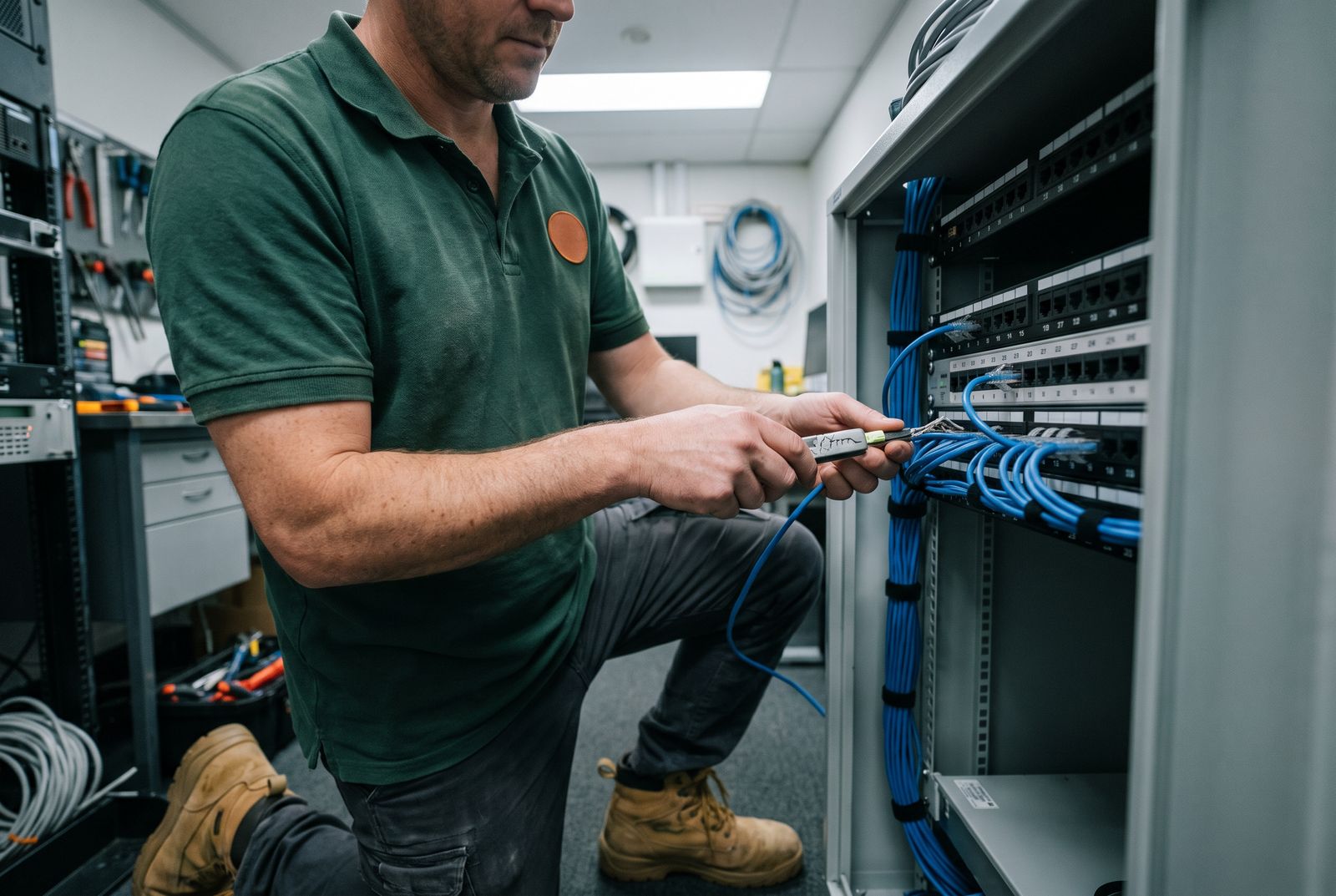
Wired PoE cameras or wifi?
Wifi cameras are quick to fit, but each one still needs power, and the picture is only as reliable as your wifi signal at that corner of the house. Power over Ethernet (PoE) cameras run on a single data cable that carries both power and video back to a recorder or PoE network switch. There is no battery to charge and no wifi to drop, which is why we recommend wired cameras for anything that matters.
A PoE cable is extra-low voltage, so it is not the same as fixed mains wiring. Where a job does involve mains work, such as a new power point for the recorder, a socket for an outdoor camera, or a circuit to a gate or garage, that is electrical work for a licensed electrician, and WorkSafe says new fixed wiring comes with a Certificate of Compliance.
- PoE cameras: one cable for power and video
- Wifi cameras where cabling is not practical
- Doorbell cameras wired to an existing or new supply
- Mains work done and certified by a licensed electrician
Where the recorder goes
A network video recorder (NVR) stores the footage, so it is the first thing a burglar would take if they could find it. We place it somewhere out of sight but ventilated and reachable, such as a hall cupboard, a comms cabinet or a locked room at a business, not on a shelf beside the front door. It needs a power point, a connection to your router for phone viewing, and ideally a small UPS so a short power cut does not stop recording.
Recording length depends on the number of cameras, the resolution and how much storage you buy. We set motion-based recording and a sensible retention period, so you keep what you need without filling the drive with hours of an empty lawn.
How It Works
Cameras that survive Wellington weather
NIWA's climate summary for Wellington records gusts over 63 km/h at the airport on about 166 days a year, and gale force winds can arrive in any month. A camera on a flimsy bracket shakes in a southerly, which ruins the picture and triggers false motion alerts. We fix cameras to solid framing, keep brackets short, and avoid mounting them on fascias or spouting that flex in the wind.
Rain and salt are the other enemies. We choose outdoor cameras with a suitable ingress protection (IP) rating, seal every cable entry with a drip loop, and use outdoor-rated cable where runs are exposed. BRANZ treats land within 500 m of the sea, including harbours, as a high corrosion zone, so coastal homes in places like Island Bay, Seatoun, Eastbourne or Raumati get corrosion-resistant housings and fixings. Facing cameras away from the prevailing rain also keeps lenses clearer.
- Solid fixings to framing, not cladding alone
- Weather-rated cameras with sealed cable entries
- Corrosion-resistant hardware near the sea
- Angles set to limit rain on the lens and glare at night
Privacy at home: the neighbours and the street
The Privacy Commissioner's guidance on CCTV at home says the Privacy Act 2020 usually does not apply when an individual films in a personal capacity, but it can if the filming is highly offensive to a reasonable person, such as recording into a bathroom. Other laws can still apply: the Crimes Act prohibits intimate recordings made without consent.
The Commissioner's practical tips are sensible design rules, and we follow them when aiming cameras. On Wellington's close-packed hill streets, where one house often looks straight down into the next section, they matter even more.
- Talk to your neighbours before installing
- Put up signs saying cameras are in use
- Do not aim cameras at a neighbour's property, doors or windows
- Do not keep footage longer than you need it
- Think carefully before posting footage online; give it to Police if you suspect an offence
CCTV for businesses
For a business, CCTV footage is personal information, so collecting, storing and sharing it must comply with the Privacy Act. The Privacy Commissioner's CCTV guidance asks businesses to work out their purpose before installing, collect only what they need, tell people with signs that show who runs the system, set how long footage is kept, secure it, and be ready to answer requests from people who want to see footage of themselves.
Audio is more invasive, so the Commissioner advises switching it off unless it is necessary, and telling people if you do record sound. We help plan camera positions around those rules, set up user access on the recorder, and can tie the system into a wider fit-out by our commercial electrician team.
Why Choose Cheeky's Electrical for CCTV Installation
Wired for reliability
PoE cameras on proper data cable, so footage does not depend on the wifi at the far corner.
Built for the wind and salt
Solid fixings, sealed entries and corrosion-resistant hardware where the site calls for it.
Aimed with privacy in mind
Camera angles planned around the Privacy Commissioner's guidance for homes and businesses.
Power and data in one visit
Licensed electricians handle any mains work and certify it alongside the camera install.
CCTV Installation FAQs
Are wired cameras better than wifi cameras?
For reliability, yes. PoE cameras get power and data down one cable, so they do not depend on batteries or the wifi signal. Wifi cameras suit spots where cabling is impractical.
Do I need an electrician to install security cameras?
The PoE data cable is extra-low voltage. Any mains work, such as a new power point for the recorder or a camera, is electrical work for a licensed electrician, with a Certificate of Compliance.
Can my camera see the street or my neighbour's property?
The Privacy Commissioner advises not aiming cameras at a neighbour's property, doors or windows. Footage that could be seen from the street is not generally considered highly offensive, but we keep angles focused on your own property.
Will cameras cope with Wellington wind?
If they are fixed to solid framing on short brackets, yes. Cameras on fascias or long arms shake in strong gusts, which spoils footage and sets off motion alerts.
Where should the recorder go?
Somewhere hidden, ventilated and reachable, with a power point and a link to your router. A small UPS keeps it recording through short power cuts.
Does a business need signs for CCTV?
The Privacy Commissioner says businesses should tell people they are being recorded, usually with signs that show who operates the system and how to contact them.
CCTV Installation Near You
Find your region or suburb for local cctv installation information:
Related Electrical Services
See the electrician prices guide or every service we offer.
Sources and further reading
- Privacy Commissioner: CCTV at home
- Privacy Commissioner: CCTV guidance
- Privacy Commissioner: Responding to access requests for CCTV footage
- Privacy Act 2020
- WorkSafe: Getting electrical work done
- NIWA: The Climate and Weather of Wellington (2nd ed., 2014)
- BRANZ: Metal corrosion factsheet and exposure zones