Most electrical faults are irritating rather than dangerous. The RCD that drops out every time a southerly blows rain against the house, the bedroom sockets that died and never came back, the dimmer that hums, or the lights that dip when the oven heats up. They are easy to put up with for a while, but they seldom go away on their own and some get worse.
This page is about booked repairs: how we find the real cause, what you can safely check yourself first, and when a repair is really the start of a bigger job. If you have a burning smell, sparks or a breaker that will not stay on, treat it as urgent and go to our emergency electrician page instead.
Pricing: a free quote and a fixed price agreed before we start. You get a written, itemised quote, and small jobs can be quoted from photos.
Burning smell, sparking, a shock or no power at all? Do not wait for a booking. See emergency electrician.
The faults we are called out for most
A short list of faults makes up most repair visits. Many come down to a loose terminal, a worn switch, an appliance that is breaking down, or water getting in where it should not. In Wellington the weather plays a bigger part than in many places, because wind pushes rain into exterior fittings that would stay dry in calmer towns.
We test before we replace anything, so you pay for the part that actually fixes the problem rather than a series of guesses.
- RCD or breaker that trips with no obvious cause
- Dead power points or a whole circuit without power
- Lights that flicker, buzz or dim
- Faulty switches, dimmers and light fittings
- Hot water cylinder elements and thermostats
- Faults that come and go with wind and rain
When the RCD trips in wet, windy weather
An RCD switches off when it senses current leaking to earth, which is exactly what it is designed to do. If it only trips during heavy rain, the usual suspects are an outdoor socket, a security light, a garden light or a cable entry where water is being driven in by the wind. Homes in exposed spots, such as hill sections in Brooklyn and Kelburn or the south coast around Island Bay and Seatoun, see more of this.
On the coast there is a second cause. Within about 500 m of the sea, including the harbour, BRANZ classes the exposure as a high corrosion zone, and salt spray works its way into outdoor fittings and terminals. We look at the fitting itself, not just the circuit, and replace it with one rated for the position.
How It Works
Checks to try before you call
A simple first test is to unplug everything on the affected circuits, reset the RCD, then plug appliances back in one at a time. If it trips when one item goes on, that appliance is the likely cause. WorkSafe says an appliance that keeps tripping a circuit breaker should be disconnected and repaired by a licensed worker or replaced.
If it trips with nothing plugged in, or the sockets stay dead after one reset, WorkSafe's advice is to call a licensed electrician. Common findings are a failing cylinder or oven element, damaged cable, moisture in an outdoor fitting, or several small leakages adding up on one RCD.
How we find the cause
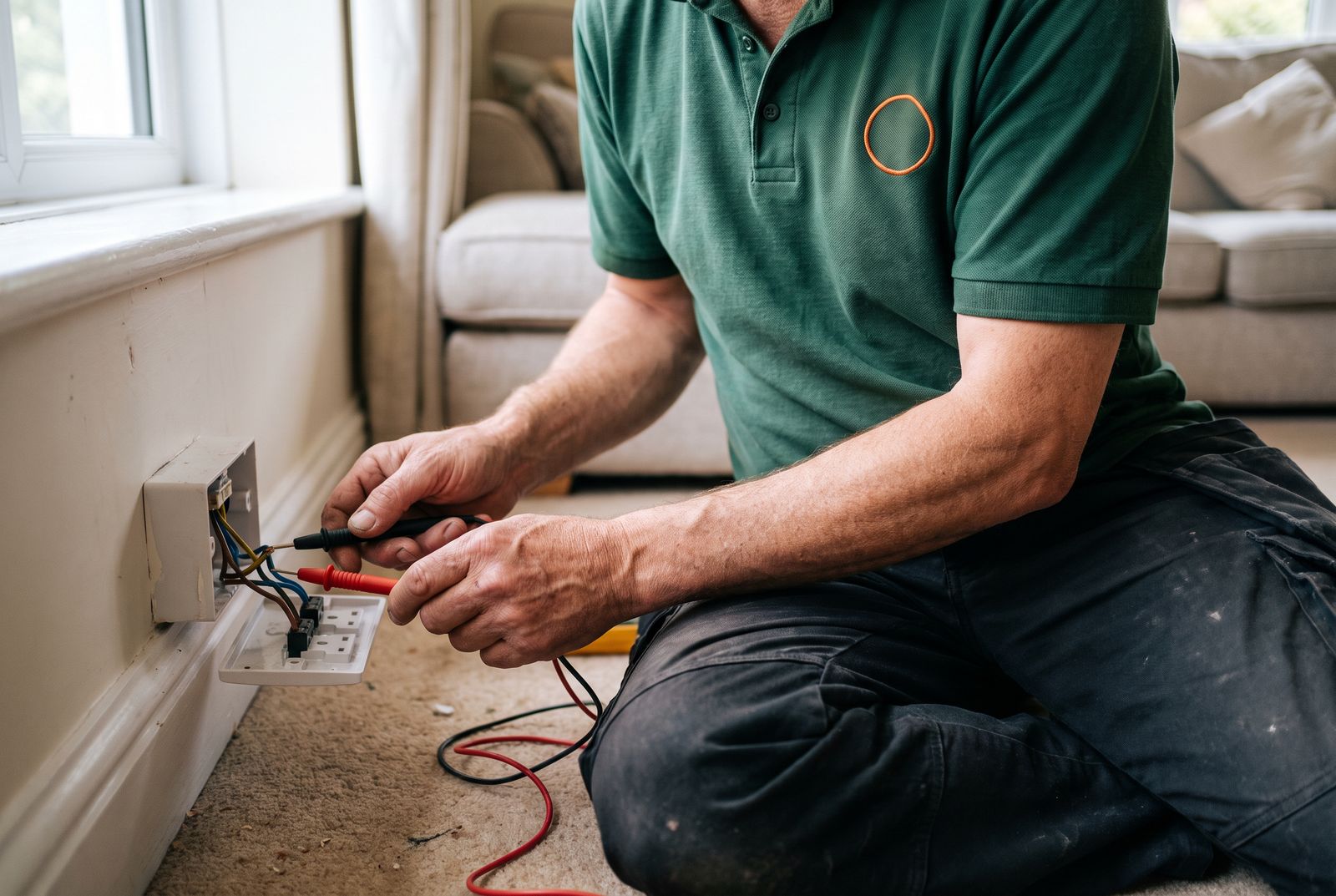
We start with what you have noticed and when, then isolate circuits at the switchboard and test them one at a time. Insulation resistance tests show whether a cable is breaking down, and loop and polarity tests confirm each circuit is wired and protected properly.
Intermittent faults take patience. A fault that only shows up in a northerly gale or when the heat pump starts has to be caught in the act or narrowed down circuit by circuit. Many older Wellington houses sit on piles with a crawl space underneath, which often lets us inspect cable runs from below without lifting floors. We explain what we found in plain language and show you the failed part where we can.
Hot water cylinder faults
An electric cylinder that runs cold or lukewarm usually has a failed element or thermostat, and both are electrical repairs. Tiaki Wai describes the supply to Wellington, the Hutt and Porirua as soft water, so scale is less often the cause of element failure here than in hard-water areas. We test the element and thermostat, replace what has failed and check the circuit.
If the cylinder itself is leaking, or the valves are dripping, that is a job for a plumber, and we will tell you so rather than charge for a visit that cannot fix it.
Paperwork, the rules, and bigger jobs
WorkSafe says a Certificate of Compliance is not issued for maintenance such as replacing sockets and light fittings. New fixed wiring, such as replacing a damaged cable run, does come with one. WorkSafe's guidance on the 2025 regulation changes says existing installations can continue and be repaired as long as they are not unsafe, so a repair does not force you to upgrade the whole house.
Sometimes the fault is a symptom. Rubber cable that crumbles at the terminals, a fuse board with no room for RCDs, or repeat faults on one circuit suggest that patching again is poor value. We show you the evidence and price both the quick repair and the longer fix, such as rewiring the old circuits. You choose.
Why Choose Cheeky's Electrical for Electrical Repairs
Tested, not guessed
We use proper instruments to find the cause before swapping any parts, so you do not pay for trial and error.
Weather faults understood
Wind-driven rain and salt are common causes of nuisance tripping here, and we fix the fitting as well as the symptom.
Both options priced
If a repair is only a patch, you see the quick fix and the proper fix side by side and make the call.
Free safety check
We test your RCDs and look over the switchboard on every repair visit.
Electrical Repairs FAQs
Why does my RCD trip when it rains?
Usually water is getting into an outdoor socket, light or cable entry. In Wellington the wind drives rain into fittings that would stay dry elsewhere. We find the fitting and replace or reseal it.
Why do my lights flicker?
Often a loose connection, a dimmer that does not suit the LED lamps, or a heavy appliance starting on the same supply. If the flicker comes with buzzing or heat, treat it as urgent.
Some sockets have stopped working. What should I check?
Look at the switchboard for a tripped breaker or RCD and reset it once. If it trips again or the sockets stay dead, the circuit needs testing.
Do I get a Certificate of Compliance for a repair?
Not for maintenance such as replacing a socket or light fitting. You do for new fixed wiring, such as a replacement cable run.
Will you make me upgrade everything?
No. Existing installations can stay and be repaired as long as they are safe. We will tell you if something is unsafe, and the decision is yours.
Can you fix my hot water cylinder?
We test and replace electric elements and thermostats. A leaking cylinder or valve needs a plumber.
Electrical Repairs Across Wellington
We cover every region: Central Wellington, Eastern and Southern Suburbs, Western and Northern Suburbs, the Hutt Valley, Porirua, the Kāpiti Coast.
Related Electrical Services
Electrical Repairs Guides
- What Is an RCD and Why Does It Keep Tripping in Wet Weather?
- Do You Need Surge Protection? Power Surges, Storms and Your Switchboard
- Power Out in Wellington? How to Tell If It's Your House or the Network
See the electrician prices guide or every service we offer.
Sources and further reading
- WorkSafe: Getting electrical work done
- WorkSafe: Changes to Electricity Safety Regulations for electrical installations (19 December 2025)
- WorkSafe: Electrical equipment and appliances
- Electricity (Safety) Regulations 2010
- BRANZ: Metal corrosion and exposure zones
- Tiaki Wai: Hard or soft water
- BRANZ: Retrofitting timber house foundations on sloping sites