An electrical inspection tells you whether a home's wiring, switchboard and protection are safe, what is old, and what is likely to need money spent on it soon. With so many older timber villas, cottages and state houses across Wellington, the Hutt and Porirua, it is one of the most useful checks you can order before buying, after inheriting a property, before renting one out, or when something feels wrong but nothing has failed yet.
This page explains what we test, what the report contains, and how Certificates of Compliance fit in. If you already have a fault, such as a breaker that keeps tripping, our electrical repairs page is the better starting point.
Pricing: a free quote and a fixed price agreed before we start. You get a written, itemised quote, and small jobs can be quoted from photos.
Only need smoke alarms checked or installed for a rental or a sale? See smoke alarm installation.
Checking portable appliances and leads at a workplace rather than the fixed wiring? See test and tag.
Pre-purchase electrical inspections
A general building inspection usually notes obvious electrical issues, but it does not test the installation. WorkSafe advises getting a licensed electrician or inspector to confirm that all installations, outbuildings and electrical equipment are safe before you buy, and to ask the vendor about past electrical work and sight all Certificates of Compliance.
Due diligence periods can be short, so we book around your dates. The report tells you what is safe, what is old but serviceable, and what needs attention, with rough priorities so you can factor the cost into your offer or ask the vendor to fix it.
What we test
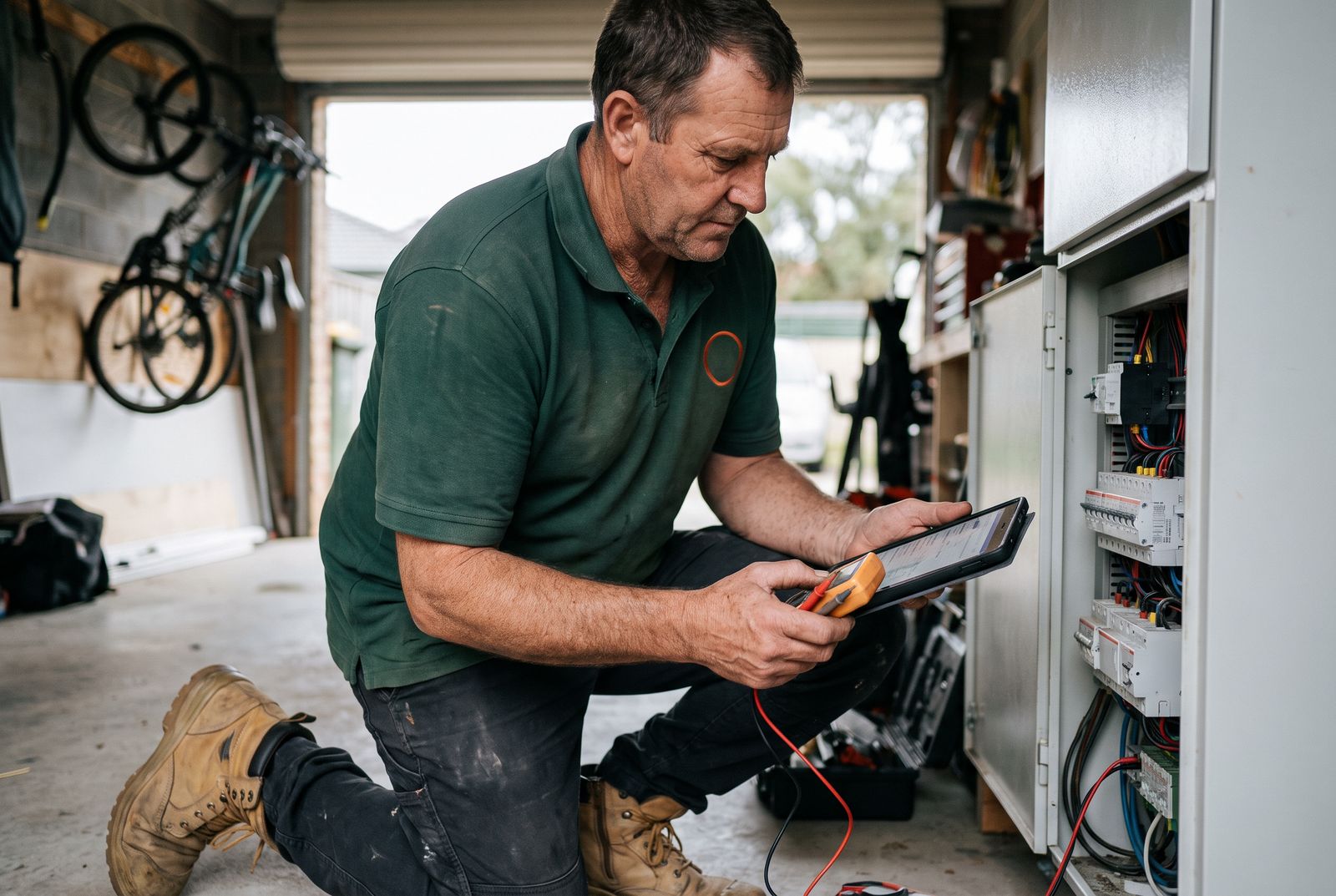
We open and inspect the switchboard, test RCD trip times, check the main earth and bonding, sample insulation resistance on circuits, and look at cable types in the ceiling space and subfloor where access allows. Many older Wellington homes sit on piles with a crawl space, which lets us see far more of the wiring than a slab house would. We check sockets, switches and fittings for heat damage, and look at outbuildings, outdoor outlets, the hot water cylinder connection and any heat pump or EV charger circuits.
We also check how the switchboard is fixed, because a board that is loose on its mounting is a concern in a region crossed by active faults. And we look for DIY work that does not belong, such as extensions spliced into rubber cable or circuits added without inspection.
- Switchboard condition, fixing, fuses or breakers, labelling
- RCD presence and trip testing
- Main earth and bonding
- Cable type and insulation condition
- Sockets, switches and fittings for heat or damage
- Smoke alarms, outbuildings and outdoor circuits
How It Works
Old wiring and RCDs
In villas, workers' cottages and early state houses the main concern is rubber insulated cable that has gone brittle and can expose live conductors. We check accessible cable runs and test insulation to show whether it is breaking down. If it is, the report says so plainly and explains the rewiring options.
Many older homes have RCDs on power circuits only, or none at all. No rule forces an existing safe installation to add them, but RCDs cut the supply when current leaks to earth and are one of the most effective safety upgrades available. We note where they are missing.
Certificates of Compliance explained
A Certificate of Compliance (CoC) is the document an electrician issues for fixed wiring work, including new power points. WorkSafe says it shows the work was done by a licensed electrician, meets the safety standards set by law, and has been tested. CoCs are not issued for maintenance, such as replacing a socket or light fitting.
An Electrical Safety Certificate (ESC) is different. Under the Electricity (Safety) Regulations, the person who did the work issues an ESC once the installation is connected and they are satisfied it is safe to use. Work on the main switchboard, main cable and main earth must also be inspected by a licensed electrical inspector, and WorkSafe advises keeping that record with your CoCs.
Your report
You receive a written report with photos, sorted into three groups: unsafe and needing attention now, worth planning for, and fine as it is. Each item has a short plain English explanation and, if you want one, a fixed price to fix it. You are under no obligation to use us for the work.
For landlords we can check smoke alarm positions and types on the same visit. Tenancy Services requires photoelectric alarms with a battery life of at least 8 years, or hard-wired alarms, for new installations in rentals. We inspect homes across the region, from the eastern and southern suburbs to the Kāpiti Coast.
Checks you can do between inspections
WorkSafe lists warning signs to watch for: plugs and sockets that are hot or have brown scorch marks, fuses that blow and breakers that trip for no reason, and flickering lights. If you notice any of them, get the installation checked. After a strong earthquake or a storm that has let water in, it is also worth a look.
Most RCDs have a test button. Pressing it should switch the protected circuits off; reset it afterwards. If it does not trip, or will not reset, call us. Before hiring any electrician or inspector, you can check their registration and licence on the Electrical Workers Registration Board's public register.
Why Choose Cheeky's Electrical for Electrical Inspections
Tested, not just looked at
We open the board and test RCDs, earthing and insulation rather than relying on a quick walk-through.
Subfloor checked where possible
In piled houses we get under the floor to see the cable runs, not just the outlets.
Plain English report
Photos and clear priorities, so you know what is urgent and what can wait.
No pressure to fix
Prices for any repairs are optional. Use the report however you like.
Electrical Inspections FAQs
Does a building inspection cover the electrics?
Usually only visually. A building inspector is not testing the installation. An electrical inspection tests the switchboard, RCDs, earthing and wiring.
What is an electrical CoC?
A Certificate of Compliance is issued by an electrician for fixed wiring work. It shows the work was done by a licensed electrician, meets the legal safety standards and was tested.
Should I ask the vendor for CoCs?
Yes. WorkSafe advises asking the vendor about past electrical work and sighting all CoCs before you buy.
Do older homes have to be brought up to current standards?
No. Existing installations can continue and be repaired as long as they are not unsafe. Only new or altered work must meet the current standard.
How long does an inspection take?
It depends on the size and age of the house and access to the ceiling space and subfloor. We confirm the expected time when you book.
How do I check an electrician is licensed?
Ask to see their practising licence and check the expiry date, or search the Electrical Workers Registration Board's public register.
Electrical Inspections Across Wellington
We cover every region: Central Wellington, Eastern and Southern Suburbs, Western and Northern Suburbs, the Hutt Valley, Porirua, the Kāpiti Coast.
Related Electrical Services
Electrical Inspections Guides
- Old Wiring in Wellington Houses: Rubber, TRS and Wire Colours
- Old Fuse Box in a Wellington Villa? Signs It Needs Replacing
- Smoke Alarm Requirements in NZ: Wellington Homes and Rentals
- Electrical CoC and ESC: What You Should Get After Electrical Work
See the electrician prices guide or every service we offer.
Sources and further reading
- WorkSafe: Getting electrical work done
- WorkSafe: Electrical wiring in your home
- Electricity (Safety) Regulations 2010
- WorkSafe: Changes to Electricity Safety Regulations for electrical installations (19 December 2025)
- Tenancy Services: Smoke alarms
- EWRB: Search the electrical worker register
- Wikipedia: Wellington Fault
- BRANZ: Retrofitting timber house foundations on sloping sites