Wellington has a lot of old houses on narrow hill sections. Builder Harry Crump alone put up 156 houses in Mount Cook and Newtown between 1892 and 1908, and Aro Valley is still lined with workers' cottages and larger villas. Many of those homes have been rewired in parts, but plenty still have the board they were given decades ago.
This guide explains how a fuse box differs from a modern switchboard, the signs that yours is unsafe, what ceramic fuses do and do not tell you about the wiring, whether an old board can take a heat pump or EV charger, and why the board should be fixed firmly in earthquake country.
What is the difference between a fuse box and a modern switchboard?
Both protect your wiring, but they do it differently. A fuse box uses a short length of fuse wire in a carrier that melts when a circuit is overloaded, and it has to be rewired by hand. A modern switchboard uses circuit breakers that switch off and can be reset, plus RCDs that protect people from electric shock.
That last point is the big one. A fuse only reacts to too much current, which protects the cable from overheating. It does nothing about a small leak of current through a person, which is exactly what an RCD is built to detect. Most old fuse boards have no RCD at all.
WorkSafe describes the switchboard as the part that protects the wiring system in your home, with each fuse or breaker covering a different area. It also suggests that, where possible, rewireable fuses are replaced with plug-in circuit breakers of the same rating, because they are safer to use and do not need replacing after a fault. For a full change of board, our switchboard upgrades page explains what is involved.
| Old fuse box | Modern switchboard | |
|---|---|---|
| Overload protection | Rewireable fuse wire | Circuit breakers or RCBOs |
| Shock protection | Usually none | RCDs on every circuit |
| After a fault | Replace the fuse wire by hand | Reset the breaker |
| Mounting | Often a timber panel, sometimes a possible asbestos backing | Enclosure fixed to the framing |
| Room to add circuits | Rarely | Spare ways can be planned in |
| Labelling | Often faded or missing | Every circuit labelled |
How do I know if my fuse box is unsafe?
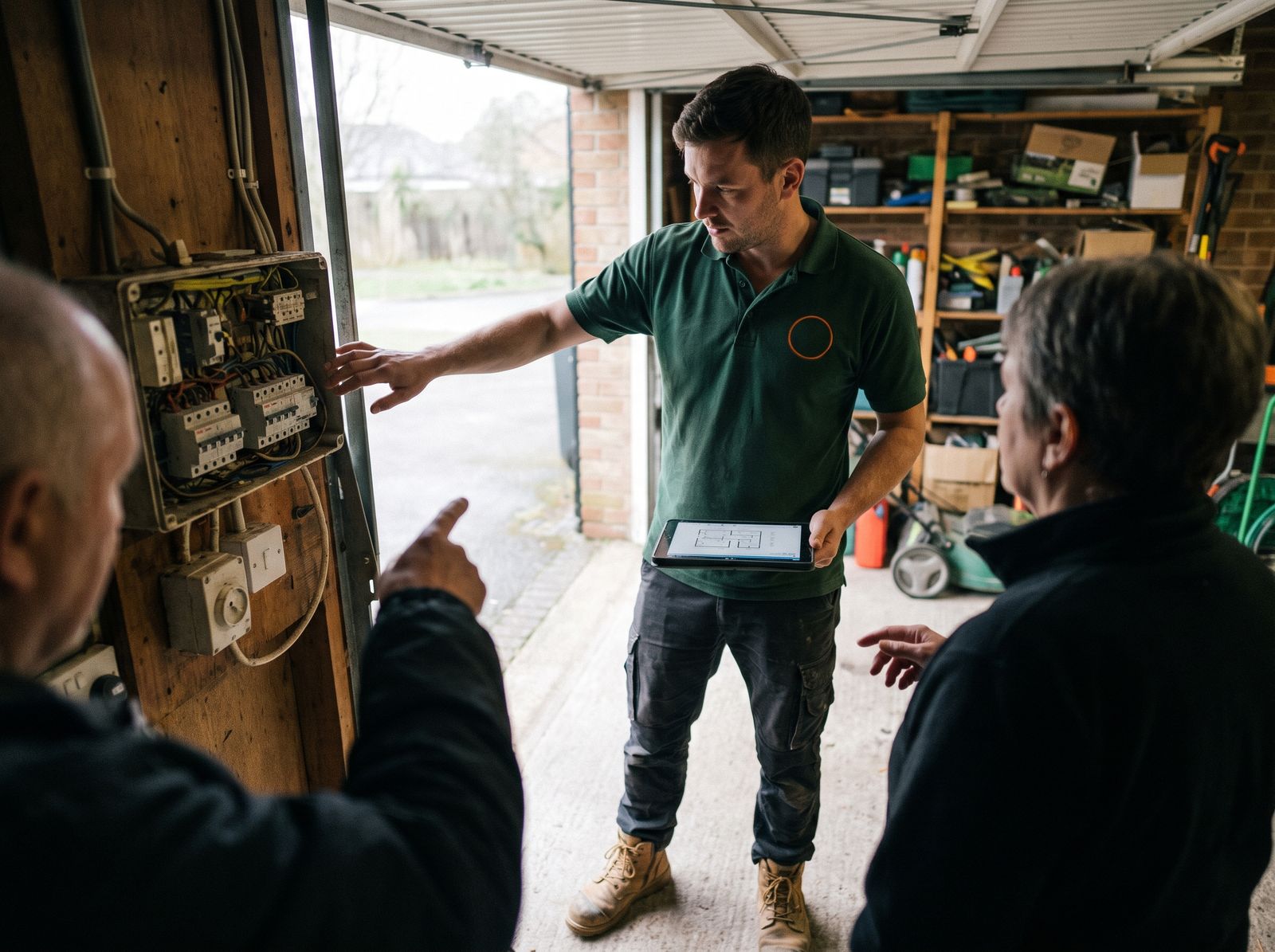
Look for heat, damage and repeated faults. WorkSafe lists plugs and sockets that are hot to the touch or scorched, fuses that blow and breakers that trip for no reason, and flickering lights as warning signs that wiring may need upgrading.
At the board itself, the warning signs are easy to spot once you know them:
- Brown or black marks around a fuse carrier or on the panel behind it.
- A board that feels warm, smells hot or makes a buzzing sound.
- Fuse wire that looks thicker than the rest, or a nail or other wire in place of fuse wire.
- Cracked ceramic carriers or carriers that do not sit firmly.
- No RCD anywhere on the board.
- Extra circuits squeezed in, or double connections where the board has run out of room.
What should you never do with an old fuse box?
Never put in a heavier fuse wire to stop a fuse blowing. WorkSafe warns that a fuse with too high a rating can let excessive current through the circuit, leading to overheating and possibly fire, and says that if a fuse keeps blowing you should call a licensed worker.
Do not leave the cover off, store things against the board, or let children reach it. Old boards often have exposed live parts behind the carriers. If you are buying a house, WorkSafe also suggests getting a licensed electrician or electrical inspector to check the internal wiring. Our electrical inspections include the board, the wiring and the earthing, with a written report you can use in negotiations.
Not sure about your fuse box?
Send Cheeky's Electrical a photo of your board with the cover open. We will tell you what we see and what a replacement would involve.
Do old ceramic fuses mean the house needs rewiring?
Not automatically. The fuses tell you the age of the board, not the condition of the cable. The only way to know is to look at the wiring and test it.
That said, ceramic fuses and old rubber-insulated cable often turn up in the same houses, because both date from the same era. Rubber insulation becomes brittle with age and can crumble where it enters fittings. In villas in Thorndon and Mt Victoria it is common to find three or four generations of wiring: original rubber cable to a back bedroom, newer plastic-sheathed cable in the kitchen, and a board that has been added to rather than replaced.
An insulation resistance test shows whether a cable is breaking down. If it passes, a new board can go on the existing wiring. If parts fail, those circuits are replaced, and sometimes a full rewiring makes more sense than patching. Most older Wellington houses have a subfloor you can get under, which makes cable work far easier than it sounds, and often means fewer holes in the walls.
Can an old fuse box handle a heat pump or EV charger?
Usually not without changes. New heat pumps, induction cooktops and EV chargers each want a dedicated circuit with modern protection, and old fuse boards rarely have the space or the right devices.
WorkSafe's EV charging guidelines call for each charging point to have its own dedicated circuit, protected by a Type B RCD, or a Type A RCD with an RDC-DD, on a MEN switchboard. An old fuse box cannot provide that. Our short post on whether you need a switchboard upgrade for an EV charger explains the options.
Capacity is the other question. If a heat pump, cooktop and charger together need more supply than the house has, the change goes through your retailer and the lines company: Wellington Electricity in Wellington, the Hutt and Porirua, or Electra on the Kāpiti Coast. We check the main supply and existing load before quoting so this comes up early, not on install day.
Should a switchboard be secured against earthquakes?
Yes. A heavy board loosely screwed to a timber panel can pull away in a strong shake and strain the cables behind it, so a replacement board should be fixed firmly to the framing with enough slack in the cables entering it.
The Wellington Fault runs from Cook Strait through Karori and the city and along the Hutt Valley, and the region has many other active faults. Securing the board is a small detail that costs little when it is done as part of an upgrade.
Cheeky's Electrical mounts every new board this way as standard, books the licensed inspector that main switchboard work requires, and gives you a written, itemised price first. If you are in the inner city, see our page for electricians in Central Wellington.
Frequently Asked Questions
Is it illegal to have an old fuse box in NZ?
No. WorkSafe's guidance on the 2025 regulation changes says existing installations can continue and be repaired as long as they are not unsafe. Many owners still upgrade for RCD protection and room to add circuits.
Can I replace a blown fuse myself?
WorkSafe's guidance explains how to replace fuse wire safely with the main switch off and the correct rating. If the fuse blows again, stop and call a licensed electrician, because something on that circuit is faulty.
Does a new switchboard need an inspection?
Yes. Work on the main switchboard must be inspected by a licensed electrical inspector, and the electrician normally arranges it. You receive a Certificate of Compliance and an Electrical Safety Certificate.
How long is the power off for a board replacement?
For a typical house it is off for most of a working day. Plan around fridges, freezers and anyone working from home, and ask for the expected time in writing with your quote.
What if my board is on an asbestos panel?
Some older boards are mounted on panels that may contain asbestos. Do not drill, cut or break the panel. Your electrician should identify it and plan safe removal as part of the replacement.
Our Services
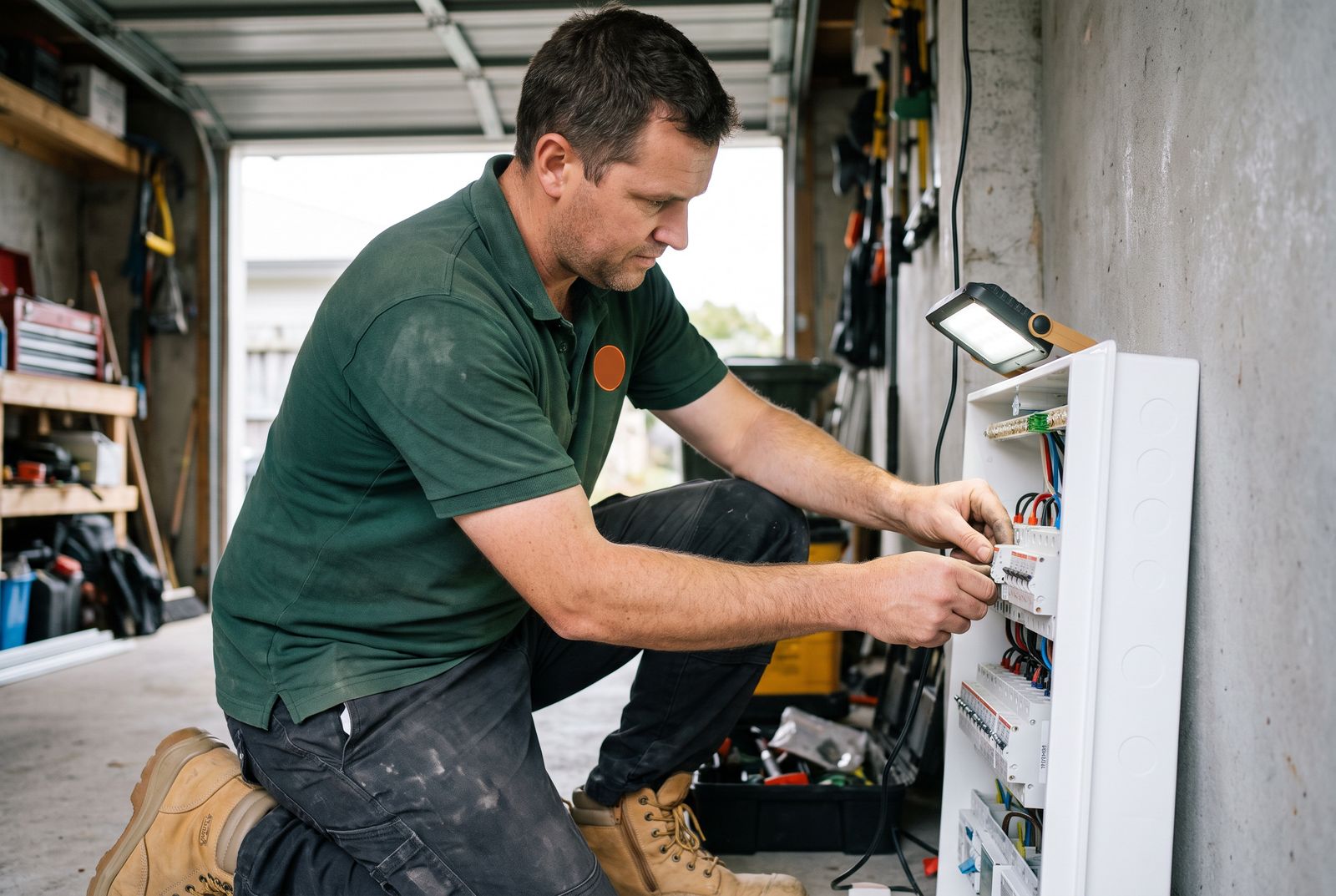 Switchboard UpgradesOld fuse boards replaced with a modern switchboard, circuit breakers and RCD protection, inspected and certified.
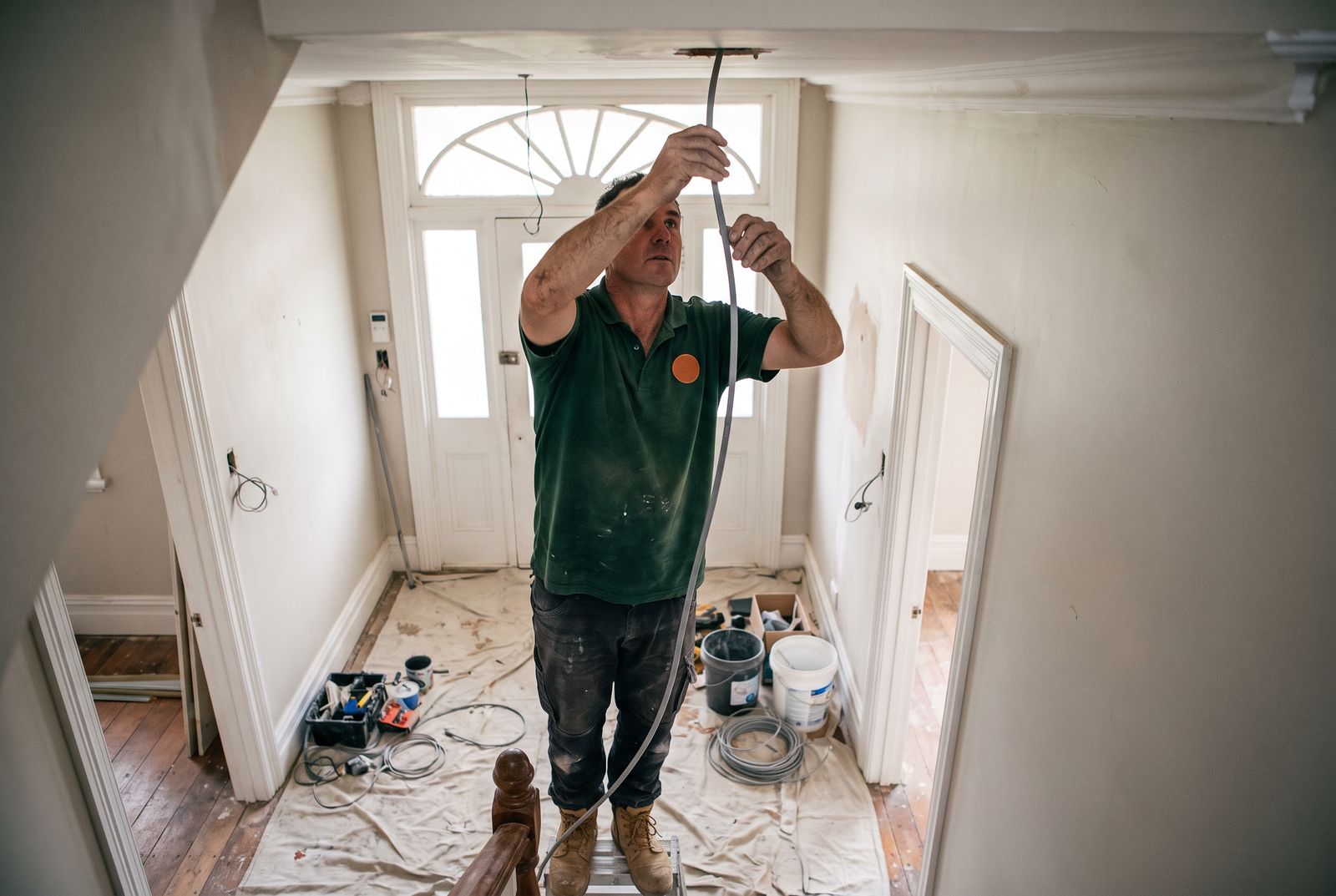 House RewiringFull and partial rewires for villas, bungalows and older homes, replacing tired rubber-insulated or overloaded wiring.
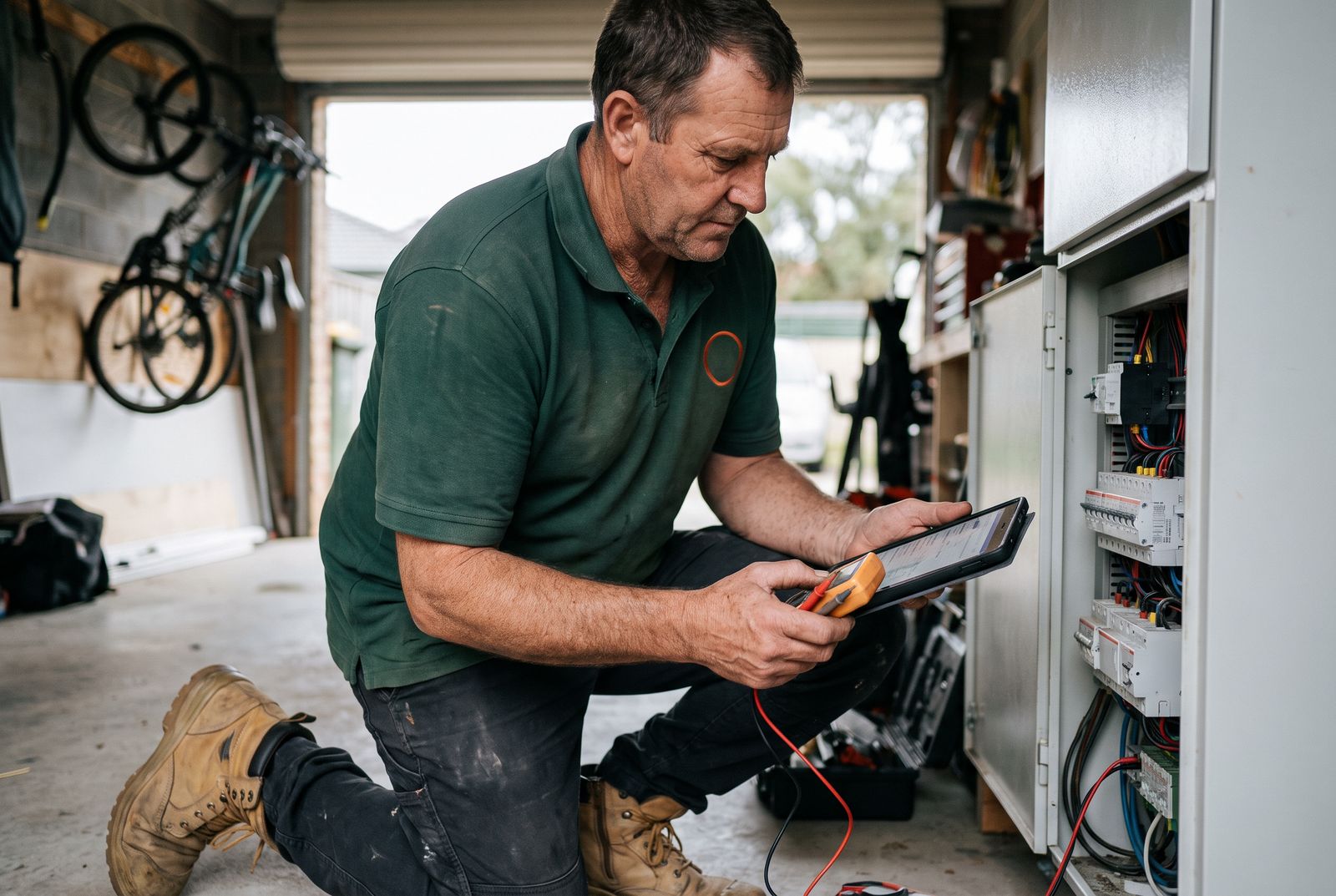 Electrical InspectionsElectrical safety inspections and pre-purchase checks with a written report, covering the switchboard, wiring, RCDs and earthing.
Read Next
What Is an RCD and Why Does It Keep Tripping in Wet Weather?
An RCD, or residual current device, is a safety switch that cuts power within a fraction of a second when it senses curr...
Read article
Do You Need Surge Protection? Power Surges, Storms and Your Switchboard
Most homes benefit from some surge protection, and the best setup is usually layered: a surge protection device at the s...
Read article
Trees, Wind and the Power Line to Your House: Who Is Responsible?
In New Zealand the tree owner is responsible for keeping trees clear of power lines, under the Electricity (Hazards from...
Read article