

An RCD that keeps tripping is annoying, especially at night in a southerly. But the RCD is rarely the problem. It is the messenger, telling you that current is going somewhere it should not, and a wet fitting is the most common reason in a city where rain arrives sideways.
This guide explains what an RCD does, why rain sets it off, a step by step way to find the culprit, how to test your RCDs, and how to tell whether your home has enough of them.
What is an RCD and what does it do?
An RCD compares the current flowing out along the active wire with the current coming back along the neutral. If some of it is missing, it must be leaking to earth, perhaps through damp insulation or through a person, and the RCD switches off before that leak can do serious harm.
That makes it different from a circuit breaker or fuse, which only reacts to too much current and protects the cable from overheating. An RCD protects people. WorkSafe says to always use an RCD or an isolating transformer with electrical equipment outdoors, because it cuts the current if there is an electrical problem and can protect you from a fatal shock.
On a switchboard, an RCD usually has a test button marked T and may cover several circuits. An RCBO does both jobs for a single circuit, so a fault turns off only that circuit. Since 13 November 2025, the version of AS/NZS 3000 cited in New Zealand law requires RCDs that provide shock protection to meet Type A requirements, or to be Type F or Type B.
Why does my RCD trip when it rains?
Because water conducts. When rain reaches a live part, a little current leaks to earth through the water, and the RCD sees the imbalance and trips. Once the fitting dries out, the RCD resets happily, which is why the fault seems to come and go with the weather.
Wellington's wind makes this more likely than in calmer places. NIWA records gusts over 63 km/h at Wellington Airport on about 166 days a year, and wind drives rain up under covers, into gaskets and through cable entries that would stay dry in still weather. Hill homes in Kelburn and Brooklyn and exposed coastal streets catch the worst of it.
Salt adds a second problem on the coast. BRANZ puts land within 500 m of the sea, including harbours, in its highest sea spray zone, and homes in Island Bay, Seatoun and Tītahi Bay near the water are likely to be in it. Salt corrodes terminals and seals over time, so a fitting that was weatherproof when new may not be after a few winters.
- Outdoor sockets, especially with a cover that no longer closes.
- Sensor and security lights mounted where rain hits them directly.
- Garden, deck and path lights with ageing seals.
- Cable entries into the house, meter box or a shed.
- Spa pool, pump or garage circuits fed by underground cable.
- A hot water cylinder element or oven element starting to fail.
RCD tripping every time it rains?
Cheeky's Electrical tests each circuit and outdoor fitting to find where water is getting in, then fixes the cause instead of just resetting it.
How do I find which appliance is tripping it?
Work through it one item at a time. The aim is to find out whether the trip follows an appliance you can unplug or stays with the fixed wiring, which needs an electrician.
If the RCD trips with nothing plugged in, or will not reset at all, the fault is in the fixed wiring or a hard-wired fitting. WorkSafe's advice when a breaker keeps tripping is to call a licensed electrician, and that applies equally here. Our electrical repairs team isolates each circuit and tests the insulation to find the weak point.
- Switch off or unplug everything on the affected circuits.
- Reset the RCD once.
- If it holds, plug appliances back in one at a time, waiting a minute between each.
- If it trips when one goes on, that appliance is the likely cause: leave it unplugged and get it checked or replaced.
- If it only trips in rain with everything unplugged, suspect an outdoor fitting or cable on that circuit.
- Write down when it trips: time, weather and what was running. It helps a lot with intermittent faults.
How often should I test my RCDs?
Press the test button regularly. The instructions printed on many RCDs ask for a regular push button test, and we suggest a few times a year, for example when the clocks change in spring and autumn, so it becomes a habit.
Pressing T should make the RCD trip straight away and cut power to its circuits. Reset it, and everything should come back on. If it does not trip when you press the button, or it will not reset afterwards, it needs checking by an electrician, because it may not protect anyone in a real fault.
Warn the household before you test, as clocks, modems and freezers on those circuits will go off for a moment. Do not test an RCD while water is coming into the house or a fitting is visibly wet. WorkSafe advises that breakers and RCDs which tripped during flooding should not be reset until an electrician has checked them.
| What happens when you press T | What it means | What to do |
|---|---|---|
| Trips at once, resets fine | Mechanism is working | Nothing, test again next time |
| Does not trip | RCD may have failed | Call an electrician |
| Trips but will not reset | Fault on a circuit or a failed RCD | Leave off, call an electrician |
| Trips more than one RCD | Wiring or board fault | Call an electrician |
Does my house need more RCD protection?
If your board has no RCDs, or only one covering the whole house, it is worth talking about. Older fuse boards often have none, and a single RCD over everything means one wet garden light can black out the kitchen, the fridge and the lights together.
Adding protection is usually done by replacing or extending the board, with RCBOs or circuits split across several RCDs so a fault only affects part of the house. Our guide on signs an old fuse box needs replacing covers that decision, and our switchboard upgrades page explains what a modern board includes.
The other half of the fix is outside. Replacing tired fittings with ones rated for the position, adding a proper weatherproof cover to an outdoor socket, or moving a light under an eave often stops the tripping for good. Cheeky's Electrical fits coastal-rated gear where salt is a factor and can redo outdoor lighting and outdoor power points so they stand up to Wellington weather.
Frequently Asked Questions
Is it safe to keep resetting a tripping RCD?
One reset to see if it holds is fine. Resetting again and again ignores a fault the RCD is detecting, and leaves you exposed to the shock risk it is there to prevent. Leave it off and get it tested.
Can an old RCD trip for no reason?
An RCD can wear out, but most nuisance trips have a real cause, such as several small leaks adding up on one RCD. Testing the circuits and the RCD itself shows which it is.
Why does my RCD trip when the heat pump or kettle comes on?
An appliance with damaged insulation or a failing element can leak current when it starts up. Try it on another circuit. If the trip follows the appliance, it needs repair or replacement.
What is the difference between an RCD and a safety switch?
They are the same thing. Safety switch is the everyday name for an RCD. Portable RCDs that plug into a socket are also available for power tools and outdoor gear.
Can I fit an RCD myself?
No. Fitting an RCD in the switchboard is work on the fixed installation and should be done by a licensed electrician, who tests it and provides a certificate for the work.
Our Services
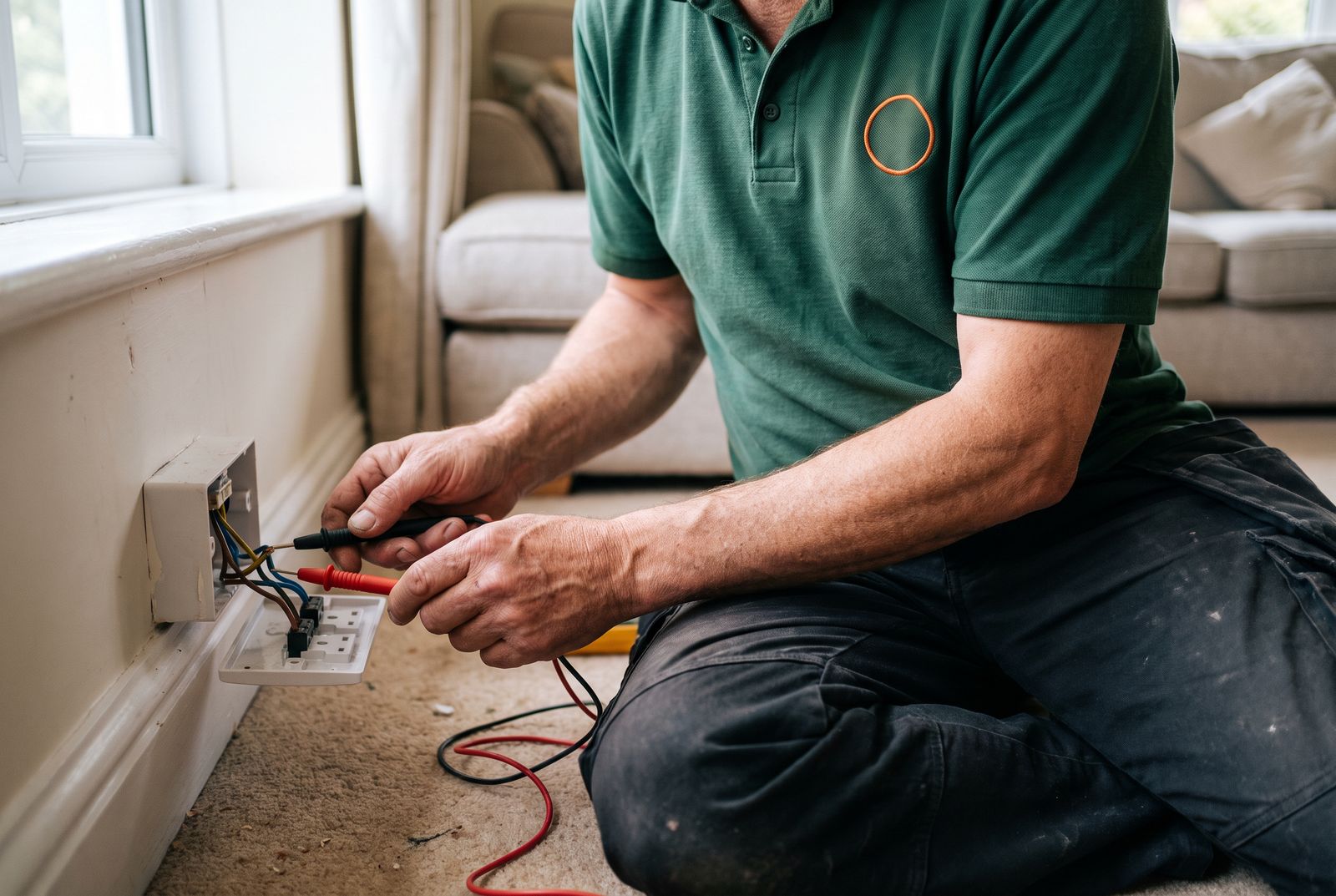 Electrical RepairsTripping RCDs, dead power points, flickering lights and faulty switches traced to the cause and repaired, not just reset.
 Outdoor LightingGarden, deck, driveway and security lighting, with sensors and timers, wired safely for the outdoors.
 Power PointsExtra power points, USB sockets, outdoor weatherproof outlets and new circuits for heat pumps, spa pools and workshops.
Read Next
Old Fuse Box in a Wellington Villa? Signs It Needs Replacing
An old fuse box needs replacing when it shows damage or stress: scorch marks, a warm or buzzing board, fuses that blow o...
Read article
Power Out in Wellington? How to Tell If It's Your House or the Network
If your neighbours and the streetlights are dark too, it is almost certainly a network outage: check Wellington Electric...
Read article
Electrical CoC and ESC: What You Should Get After Electrical Work
After most fixed wiring work in New Zealand you should receive two documents. The Certificate of Compliance (CoC) record...
Read article