
A smoke alarm is cheap protection, but only if it is the right type, in the right place, and inside its service life. We install hard-wired and long-life photoelectric alarms in homes, rentals and new builds across Wellington, the Hutt Valley, Porirua and the Kāpiti Coast, and we tell you plainly which rules apply to your property.
Landlords have specific legal duties, new builds and consented alterations have their own standard, and owner-occupiers simply want everyone to wake up. This page covers all three, plus what is different in apartments and multi-level hillside houses. Alarms sit alongside our electrical inspections, so we can check the switchboard on the same visit.
Pricing: a free quote and a fixed price agreed before we start. You get a written, itemised quote, and small jobs can be quoted from photos.
Want the wiring, switchboard and outlets checked as well? See electrical inspections.
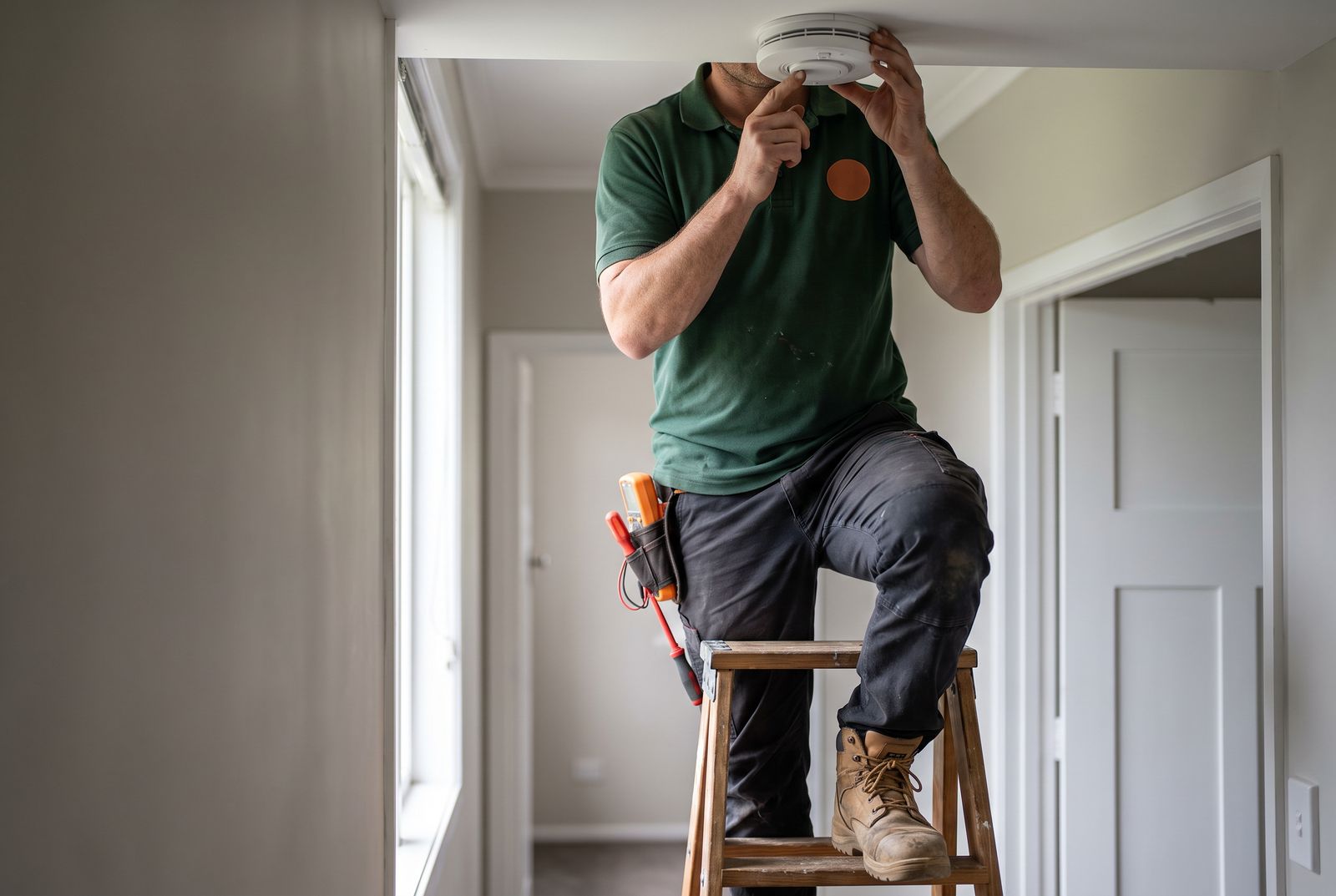
What the law requires in rentals
The Residential Tenancies (Smoke Alarms and Insulation) Regulations 2016 set the minimum for every rental home, boarding house, rental caravan and self-contained sleep-out. As Tenancy Services summarises them, alarms must be within 3 metres of each bedroom door, or in every room where someone sleeps, and there must be at least one on each level of a multi-level home.
Any new alarm must be photoelectric with a battery life of at least eight years, or be hard-wired. Some websites quote ten years; the legal minimum is eight. Working alarms that have not passed their expiry date do not need replacing. The landlord must make sure alarms work at the start of each tenancy and stay in working order. Tenants must not damage, remove or disconnect an alarm, and must report problems promptly. Tenancy Services says landlords who fail these obligations can face penalties of up to $7,200, and tenants up to $4,000.
- Within 3 m of each bedroom door, or in every room where someone sleeps
- At least one on every level of a multi-level home
- New alarms: photoelectric with an 8-year or longer battery, or hard-wired
- Working at the start of each tenancy, and kept working during it
Split-level and hillside houses
Many houses on Wellington's hill sections are built down the slope, sometimes with a garage or rumpus room on a separate level from the bedrooms. The one-alarm-per-level rule catches these out, because a lower floor that only holds a rumpus or spare room still counts as a level. We walk every level with you and mark where each alarm goes before we quote.
Stairwells matter too. Smoke from a lower level rises up the stairs first, so an alarm at the top of each flight gives earlier warning to the bedrooms above it.
How It Works
New builds and consented alterations
For new homes the requirement is higher. MBIE amended the Building Code acceptable solution C/AS1 to cite NZS 4514:2021 for interconnected smoke alarms in new residential homes. After a transition period that ended in November 2024, consented new homes, sleep-outs and major alterations are expected to have interconnected alarms in bedrooms, living areas, hallways and landings, with at least one on each level.
Interconnection means that when one alarm detects smoke, every alarm in the house sounds. The link can be wired or wireless. If you are renovating under a building consent from your council, ask your designer early which alarm layout the consent assumes, so cabling goes in before the linings close.
Hard-wired or long-life battery?
Both are legal for rentals and both meet the photoelectric requirement. Long-life battery alarms are quick to fit, need no cabling, and suit most existing homes and rentals. Hard-wired alarms run off the house supply with battery backup, so there is no main battery to go flat. They suit new builds, rewires, and renovations where ceilings are already open.
Fire and Emergency New Zealand recommends long-life photoelectric alarms in every bedroom, hallway and living area, and suggests heat alarms rather than smoke alarms in kitchens, laundries and garages, where cooking fumes and dust cause false alarms. A hard-wired alarm is new fixed wiring, so it comes with a Certificate of Compliance; fitting a battery alarm does not.
Placement, apartments and multi-property landlords
Smoke rises and spreads across the ceiling, so ceiling mounting away from the wall corner is usually best. Alarms near a rangehood, toaster or steamy bathroom door become nuisance alarms, and nuisance alarms get disabled. We also keep clear of heat pump outlets and extractor fans, which can push smoke away from the sensor. Each manufacturer publishes its own mounting rules, and the tenancy rules require alarms to follow them.
In central city apartment buildings in Te Aro and Thorndon, the unit may also be part of a building-wide fire alarm system. We do not touch anything connected to that system, and we check with the body corporate first. Property managers can send us a list of addresses for a batch quote; we replace alarms near expiry and leave a record per property showing alarm type, location and expiry date.
- Ceiling-mounted, clear of corners and light fittings
- Away from cooktops, toasters and bathroom steam
- Out of the airflow of heat pumps and extractor fans
- Inside each bedroom where doors are kept closed
Why Choose Cheeky's Electrical for Smoke Alarm Installation
Rules matched to the property
We tell you whether the tenancy rules, the new build standard or simple good practice applies, and quote to that.
Every level covered
Split-level and hillside houses are walked floor by floor so no level is missed.
Tested in front of you
Every alarm is sounded before we leave, and interconnected systems are checked so one sets off the rest.
A record you can keep
Alarm types, locations and expiry dates in writing, plus a Certificate of Compliance for hard-wired work.
Smoke Alarm Installation FAQs
Do I have to replace my rental's existing smoke alarms?
Not if they work and are within their expiry date. When they expire, the replacement must be photoelectric with at least an 8-year battery life, or hard-wired.
Is it 8 years or 10 years for rental smoke alarms?
The legal minimum is a battery life of at least eight years. Many alarms sold now last ten years, which also meets the rule.
Our house has a downstairs rumpus and garage. Does that level need an alarm?
In a rental, yes: there must be at least one alarm on each level. For an owner-occupied home it is strongly recommended.
Do smoke alarms need to be interconnected?
Not in existing rentals under the tenancy rules. For new homes and consented major alterations, C/AS1 now cites NZS 4514:2021, which calls for interconnected alarms.
Can I put a smoke alarm in the kitchen?
Fire and Emergency suggests a heat alarm in the kitchen instead, because cooking fumes cause false alarms.
Do I get a Certificate of Compliance?
For hard-wired alarms, yes, because it is new fixed wiring. Fitting battery alarms is not electrical work and does not need one.
Smoke Alarm Installation Across Wellington
We cover every region: Central Wellington, Eastern and Southern Suburbs, Western and Northern Suburbs, the Hutt Valley, Porirua, the Kāpiti Coast.
Related Electrical Services
Smoke Alarm Installation Guides
See the electrician prices guide or every service we offer.