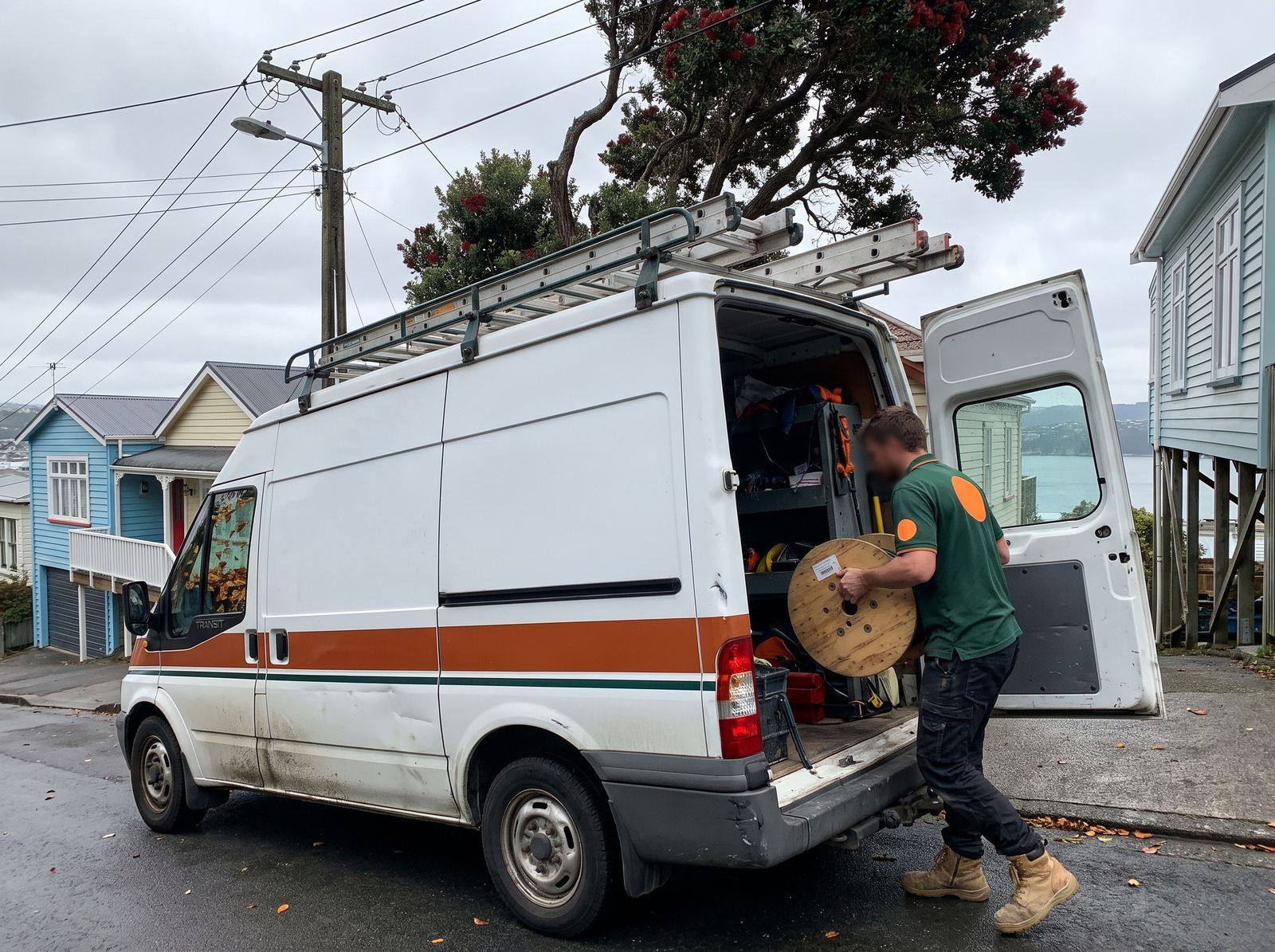
Wellington has a lot of old houses, from 19th-century villas and workers' cottages in Mt Victoria, Thorndon and Newtown to the 1940s state houses of Naenae and Tītahi Bay. Many have been renovated in stages, so it is common to find original rubber cable in one room and modern plastic cable in the next.
This guide helps you work out what you have: how to date the wiring, what the colours can and cannot tell you, why rubber insulation is a concern, and how rewiring works in a house with a subfloor you can get under. It is an identification guide; the switchboard itself is a separate topic.
How can I tell how old my wiring is?
Look at the cable, not the switches. The quickest place to see it is the ceiling space or the subfloor, where runs are exposed. Rubber cable looks and feels different from modern plastic-sheathed cable, and the oldest wiring often runs inside metal conduit or timber casing.
The era of the house is a starting point but not an answer. A villa built before 1900 may have been fully rewired decades ago, while a 1950s house may still be on its original cable. Renovations muddy it further, because a new kitchen or bathroom is usually wired with new cable even when the rest of the house is not.
One NZ pre-purchase inspection guide puts the rule of thumb simply: if your wiring is over 60 years old, there is a good chance it needs replacing. An electrician can confirm what you have with an insulation resistance test, which measures how well the insulation is still holding.
| Cable type | Period | How to recognise it | What it means |
|---|---|---|---|
| VIR (Vulcanised Indian Rubber) | The earliest NZ wiring | Single rubber-insulated wires, often in steel conduit or wooden casing | Past its life; plan to replace |
| TRS (Tough Rubber Sheathed) | Around 1940 to the late 1960s | Black rubber outer sheath that can harden and crack | Replace when brittle; test first |
| Plastic-sheathed cable | After rubber cable | Smooth, flexible plastic sheath | Usually sound if installed well |
What do old wiring colours mean in NZ?
Less than people hope. In New Zealand fixed wiring, red has long been used for the active conductor and black for neutral, and those colours turn up in plastic cable as well as rubber. A red and black pair on its own does not mean the wiring is old.
Brown, blue and green with a yellow stripe are the colours you see in flexible cords on appliances, and in some newer fixed wiring, so finding them at a socket does not prove the circuit is new either. Inside an old rubber cable the colours may have faded or darkened so much that they are hard to tell apart.
What colours cannot show you is whether the insulation is still sound, whether the circuit has an earth conductor, or whether a previous owner joined cables with the wrong colour to the wrong terminal. Never rely on colour to decide that a wire is safe to touch. Only a test with the power isolated confirms that.
- Red and black: long-standing active and neutral colours in fixed wiring
- Brown and blue: common on appliance cords and some newer wiring
- Green or green and yellow: earth
- Faded or crumbling insulation: a sign of age whatever the colour
Is rubber-insulated wiring dangerous?
It can be, because rubber insulation deteriorates over time. As it hardens and cracks, live conductors can be exposed, which raises the risk of fire and of electric shock when anyone touches or disturbs the cable. Pest damage and moisture in a ceiling space or subfloor speed that up.
The law does not force you to rewire. WorkSafe explains that existing installations can continue and be repaired as long as they are not unsafe, with no time limit. The catch is that rubber cable which is breaking down is unsafe, and it should be replaced rather than extended. Some insurers may also decline cover where the wiring is old or not fit for purpose.
WorkSafe's general warning signs apply here too: plugs and sockets that are hot or have brown scorch marks, fuses that blow or breakers that trip for no reason, and flickering lights. In an older house, any of these is a reason to book an electrical inspection rather than wait.
Not sure what is behind your walls?
Cheeky's Electrical tests old rubber and TRS wiring and gives you a clear written answer and a fixed price for any rewiring.
Where does old wiring turn up in Wellington houses?
Almost anywhere built before the 1970s, but some patterns repeat. In Mt Victoria, one of the city's oldest suburbs, repeated alterations mean a house can hold three or four generations of wiring at once. In Thorndon's villas, original rubber cable in a back bedroom can sit beside newer cable in the kitchen.
Post-war state housing has its own signs. The 1944 prefabricated state houses in Naenae and the post-war homes in Tītahi Bay may still have rubber cable in places, along with boards on rewireable fuses. Upper Hutt's late 1940s and 1950s subdivisions are similar, while its 1960s to 1980s suburbs are generally wired in plastic cable.
The board is a useful clue. A board with ceramic fuses often means the wiring behind it has not been touched in a long time. Some older switchboards also contain asbestos, which affects how they are removed, so that is worth knowing before work starts on a switchboard upgrade.
Can a villa be rewired from under the floor without opening walls?
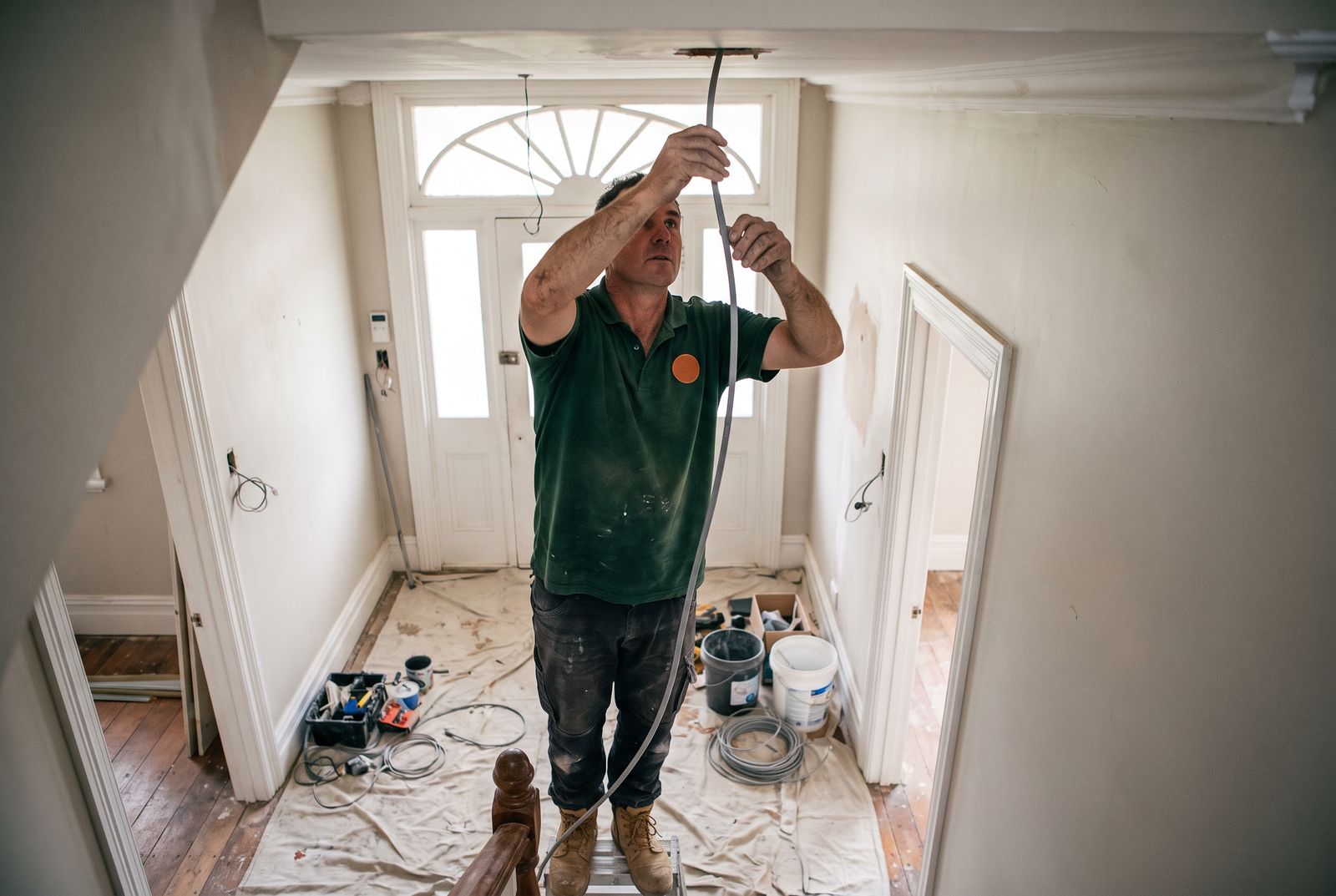
Often, mostly. Most older Wellington houses stand on timber piles with a subfloor you can crawl into, so new cable can be run under the floor and fed up inside the walls to sockets, while lighting cable comes down from the ceiling space. That keeps most of the work out of sight.
Some openings are still needed, usually small ones behind a skirting board, at a switch position or where a wall has a brace or a block that stops the cable. Lath and plaster walls need care, so the access points go where they are easiest to patch and paint.
Concrete floors and houses with no ceiling space are harder, which is why the same job can be simple in a Newtown cottage and awkward in a later extension built on a slab. Removing the old cable where it can be reached is good practice, so nobody mistakes it for a live circuit in future.
How long does a rewire take?
It depends on the house rather than a fixed number of days. A small cottage with good subfloor access is a much shorter job than a large two-storey villa, a house on a steep site with no parking, or a rewire combined with a new board and extra circuits.
The other factor is how you want to live through it. Working circuit by circuit lets most families stay at home, with power restored at the end of each day, but it takes longer than a rewire done while the house is empty or the linings are off for a renovation. The inspection and certification at the end also take a little time to arrange.
The honest way to get a timeframe is a site visit. After testing, we can give you a written plan, the order rooms will be done in and a fixed price, so you know what to expect before anything starts.
When should you call an electrician about old wiring?
Call when you find black rubber cable in the ceiling or subfloor, when you are buying an older house, when you are planning a renovation, or when you see any of the warning signs above. Do not extend or add sockets to rubber cable in the meantime.
Cheeky's Electrical tests old wiring, explains what is sound and what is not, and quotes full or partial rewiring at a fixed price. For villas and cottages in the inner city, see our page for an electrician in Central Wellington, or book a visit online and we will start with a test.
Frequently Asked Questions
Can I add a new power point to old rubber wiring?
It is not a good idea. Rubber cable that is breaking down should be replaced rather than extended, and connecting new work to it adds load and disturbs brittle insulation. An electrician will usually run a new circuit from the board instead.
Will a building inspector tell me if the wiring is old?
A general building inspection usually notes obvious issues, such as an old fuse board or visible rubber cable, but it does not test the wiring. For a real answer before you buy, have a licensed electrician or inspector test it.
Is old wiring a problem for a heat pump or EV charger?
The new appliance gets its own circuit from the board, so it does not run on the old cable. The board needs space and RCD protection for the new circuit, and an old board with fuses usually needs replacing first.
Does rewiring need a building consent?
Rewiring on its own is electrical work, certified by the electrician with a Certificate of Compliance. If it is part of a renovation that needs consent, such as moving walls, check the consent requirements with your council.
What should I do with the old cable after a rewire?
Where it can be reached, the electrician should remove it or make sure it is disconnected at both ends and cannot be mistaken for a live circuit. Ask for this to be included in the quote.
Our Services
 House RewiringFull and partial rewires for villas, bungalows and older homes, replacing tired rubber-insulated or overloaded wiring.
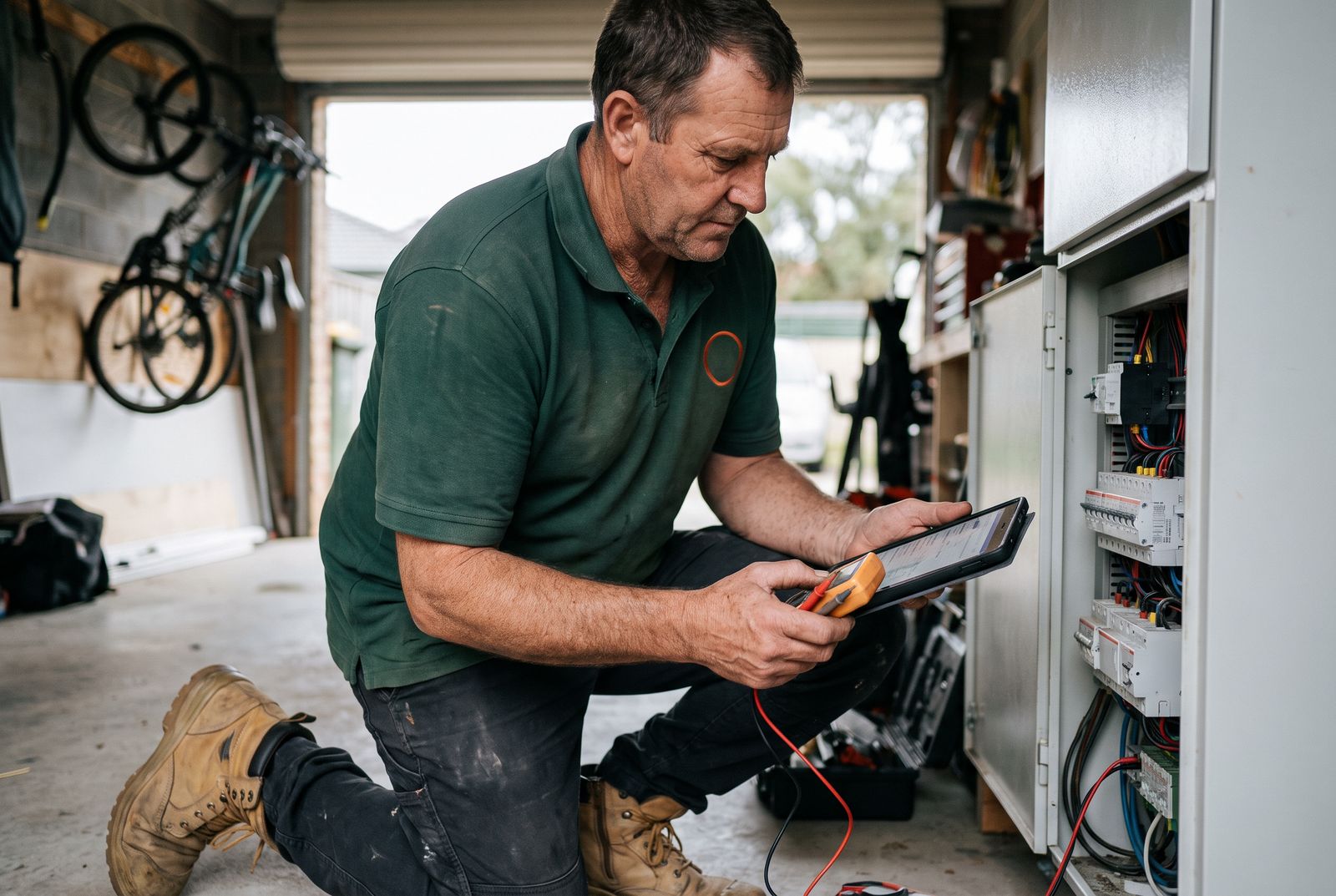 Electrical InspectionsElectrical safety inspections and pre-purchase checks with a written report, covering the switchboard, wiring, RCDs and earthing.
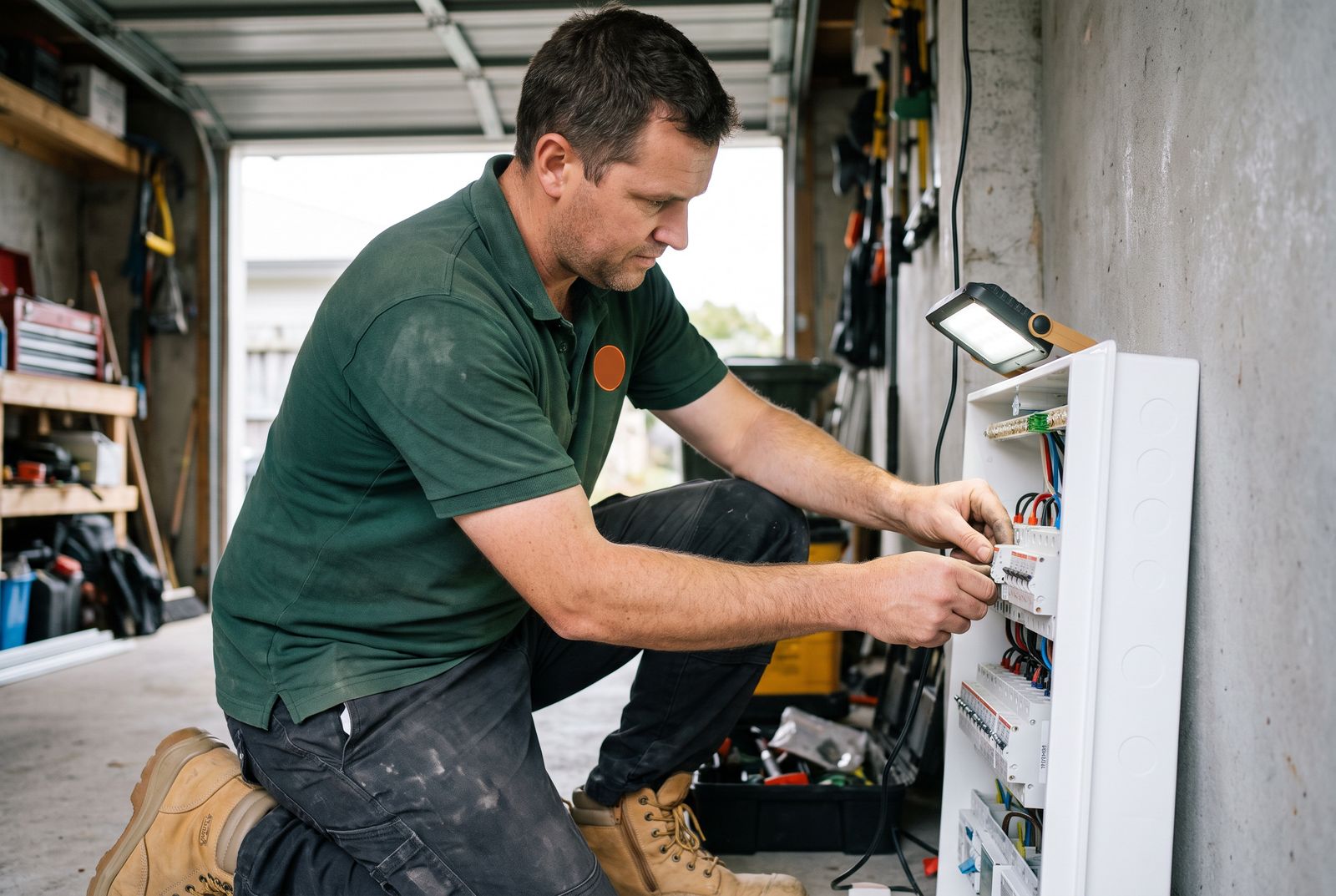 Switchboard UpgradesOld fuse boards replaced with a modern switchboard, circuit breakers and RCD protection, inspected and certified.
Read Next
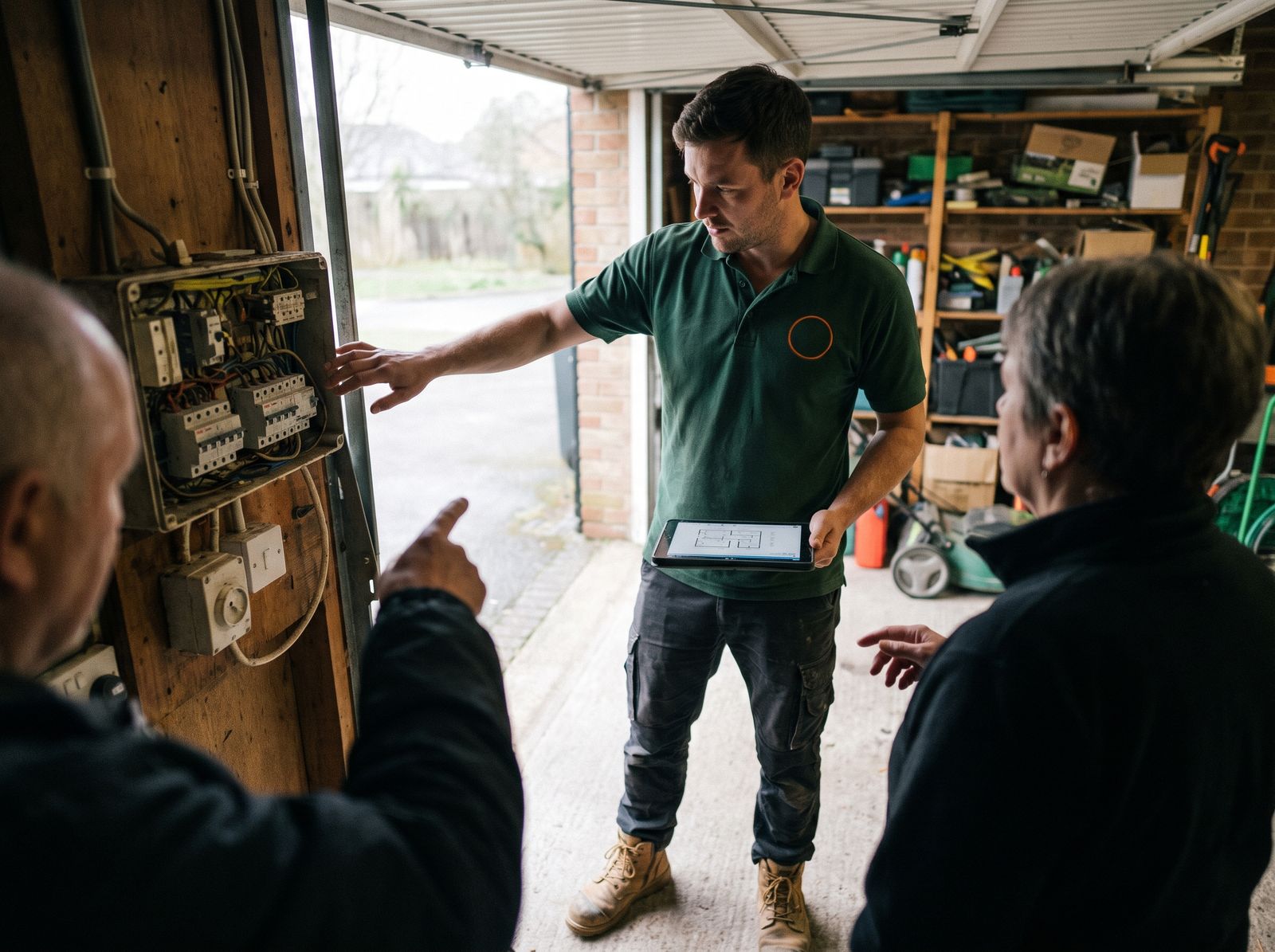
Electrical CoC and ESC: What You Should Get After Electrical Work
After most fixed wiring work in New Zealand you should receive two documents. The Certificate of Compliance (CoC) record...
Read article
Why Is My Power Bill So High in a Wellington Winter?
Most Wellington power bills rise in winter because heating and hot water, which Gen Less says make up about two-thirds o...
Read article
Old Fuse Box in a Wellington Villa? Signs It Needs Replacing
An old fuse box needs replacing when it shows damage or stress: scorch marks, a warm or buzzing board, fuses that blow o...
Read articleSources
- WorkSafe: Electrical wiring in your home
- WorkSafe: Changes to Electricity Safety Regulations for electrical installations (19 December 2025)
- The Property Inspectors: Building Basics, Electrical
- BRANZ: Retrofitting timber house foundations on sloping sites
- Heritage New Zealand: House, Aro Valley (List 7082)